I don't yet know if Henriette Lefèvre was related to the juggler and equilibrist, Lefèvre but this is still interesting.
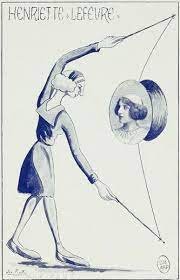
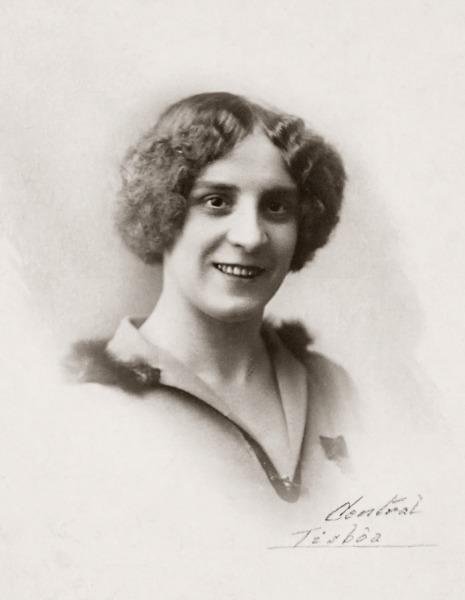
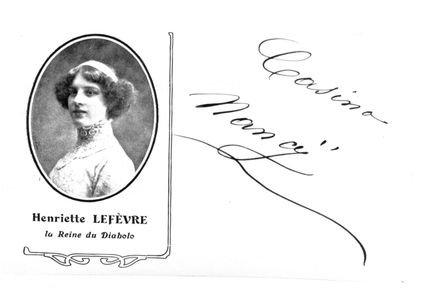
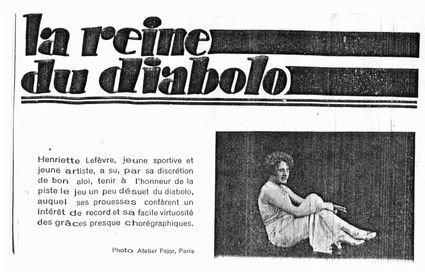
Nicknamed The Queen of Diabolo, Henriette Lefèvre performed in circuses and on the stages of casinos and theatres in the first half of the 20th century, from the Cirque Palisse in Mons in 1911, to the Alcazar of Paris in 1934, among others. By the Nouveau Cirque de la rue Saint-Honoré, directed by Charles Debray in January 1912, and by the Cirque Medrano in April 1912 and July 1923. She appears in the same program as Clément, a virtuoso manipulator of the bilboquet, which makes one say to chroniclers of the time like Gustave Fréjaville in *Comoedia*: “Here are two toys which gave birth, through bold specializations, to two juggling acts…”. Noticed, quoted in the press at each of her visits, Henriette Lefèvre appears without attachments.
The picture titled, La Reine du Diabolo translates as:
“The Queen of Diabolo, Henriette Lefèvre, a young sportswoman and young artist, knew through her discretion in good faith, hold to the honor of the track the somewhat outdated game of diabolo, to which her prowess confers record interest and her easy virtuosity almost choreographic graces.”
Nicknamed The Queen of Diabolo, Henriette Lefèvre performed in circuses and on the stages of casinos and theatres in the first half of the 20th century, from the Cirque Palisse in Mons in 1911, to the Alcazar of Paris in 1934, among others. By the Nouveau Cirque de la rue Saint-Honoré, directed by Charles Debray in January 1912, and by the Cirque Medrano in April 1912 and July 1923. She appears in the same program as Clément, a virtuoso manipulator of the bilboquet, which makes one say to chroniclers of the time like Gustave Fréjaville in *Comoedia*: “Here are two toys which gave birth, through bold specializations, to two juggling acts…”. Noticed, quoted in the press at each of her visits, Henriette Lefèvre appears without attachments.
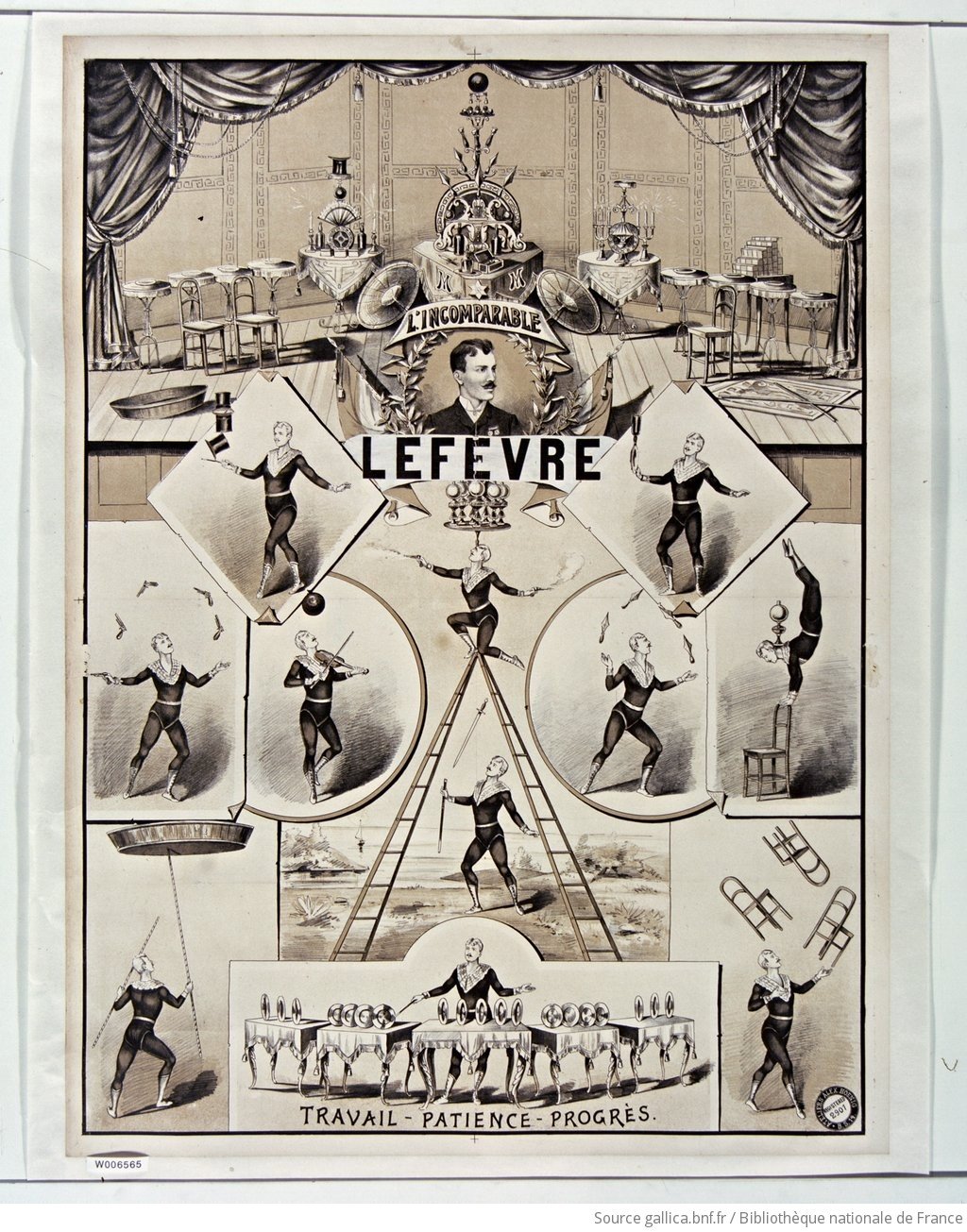
However, by coincidence or not, at the end of the 19th century we can note the communication of another juggler, manipulator of tubs, daggers, swords, bottles or rotating plates, called L'incomparable Lefèvre, in several media. And in a collection of unpublished memories entitled *With the suitcase*, François Bontemps – the clown Bilboquet – evokes the rare prowess of a weapons manipulator from the mid-19th century in these terms: “Deburau had in his troop an illustrious Madame Lefèvre who excelled in sword and ax fights.
The picture titled, La Reine du Diabolo translates as:
“The Queen of Diabolo, Henriette Lefèvre, a young sportswoman and young artist, knew through her discretion in good faith, hold to the honor of the track the somewhat outdated game of diabolo, to which her prowess confers record interest and her easy virtuosity almost choreographic graces.”
I've done a bit more digging into this juggler and equilibrist, Lefèvre. I've found another awesome poster, this time publicising him as “L'incomparable Lefèvre”. The array of skills and tricks is stunning: manipulating top hats; juggling guns, knives, swords and chairs; balancing props on his head while balancing on top of a ladder; spinning a large bowl; playing a violin while bouncing a ball on his head (?); plate waltzing.
It's frustrating that we know so little about him as he was clearly an amazing performer (if the posters aren't lying).