Taken from his book, “This Way to the Big Show” (1936), veteran circus press agent Dexter W. Fellows, recalled the Desperado act: “this German acrobat gave circus audiences the greatest, heart-stopping thrill of any dare-devil performer I've ever seen.”
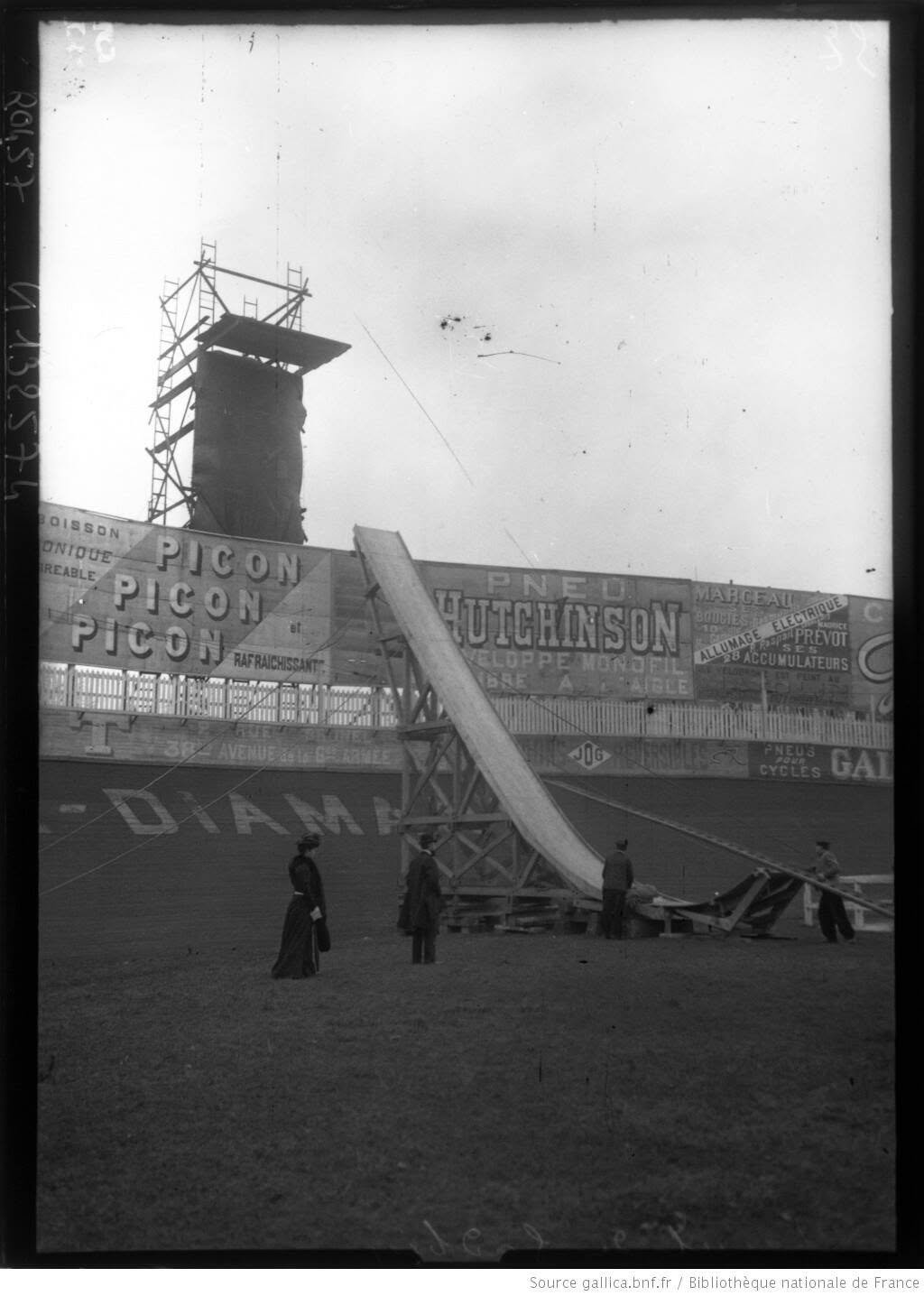
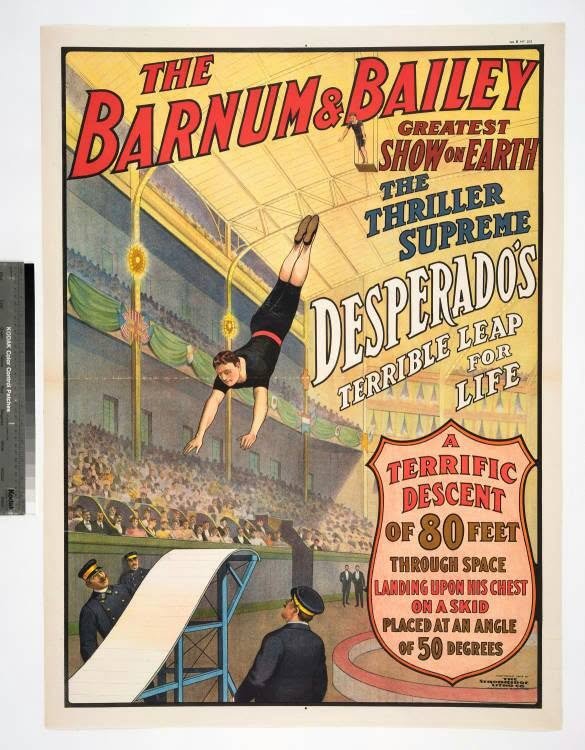
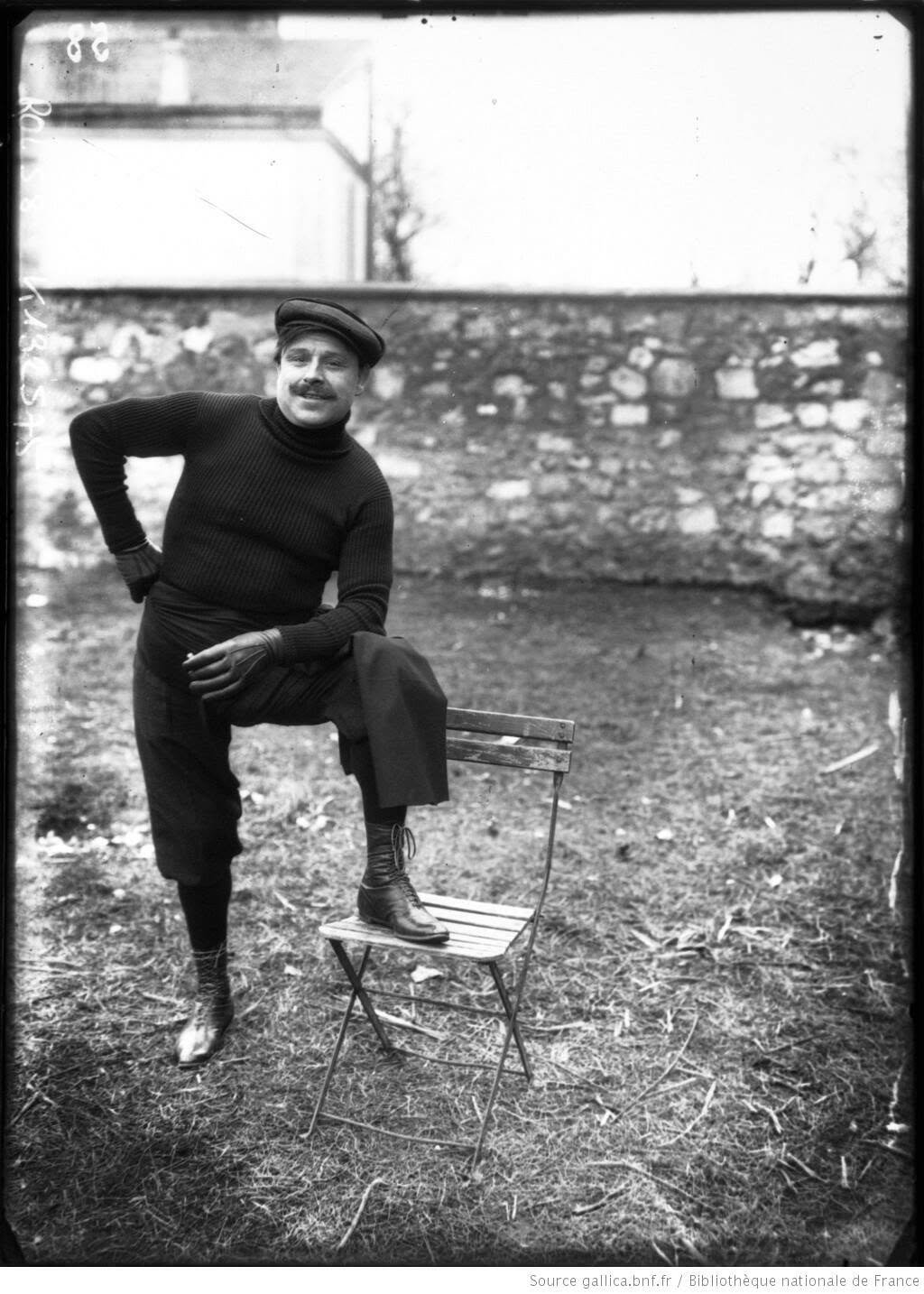
Fellows described the cigar-box sized platform as being sixty feet high in the garden, the diver looking like a puppet in a jersey and trousers, reaching a speed of 100 feet per second. The bottom of the slide curved upwards, enabling Desperado to land on his feet. “Others who attempted the same stunt wore leather armor to take up the shock, but Desperado depended entirely upon iron muscles and steel nerves.” “He would look down upon a house held in deathly silence, and then leap.” “Hearts may cease to throb” was how the program explained it. Fellows identified the man as Ernest Gadbin. To what degree the diver utilised any padding or an impact “apron” is unclear. The slide extended some distance upwards, as seen in photographs, but it must still have been thrilling to see anyone leap from a high, elevated platform downward to the inclined slide, with no safety appliance of any type in use. An article in “Everybody's” magazine in 1910 set his salary at $600 per week.
Henry Ringling North, informed by his Uncle John Ringling, who likely hired the “mad German” Ernest Gadbin, reported a corn meal application lubricated the slide or “toboggan,” and also stated that the slide curved upwards at the bottom, depositing Desperado into a net. North set the diver's speed at a mile a minute (60 miles per hour), which equates to 88 feet per second, with a jump height of 80 feet. [“Circus Kings,” page 148.] The elevation was stated in some other sources to be 80 feet when staged in Madison Square Garden.
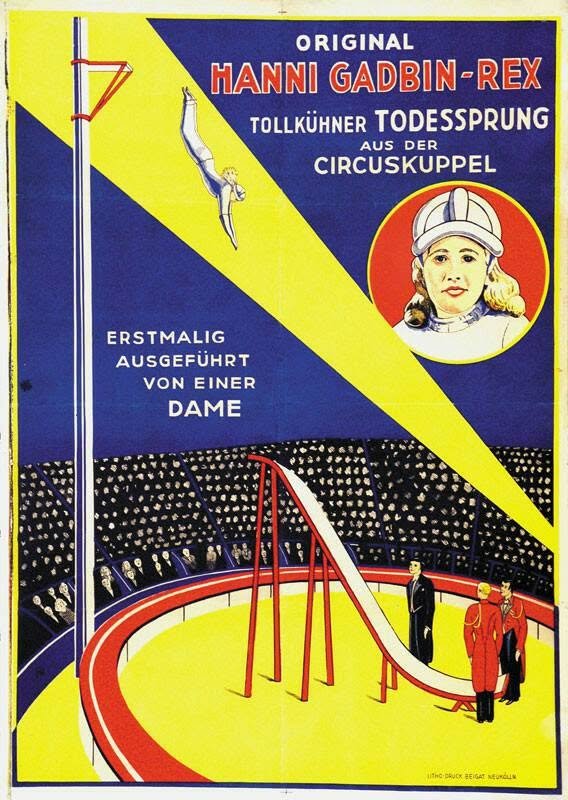
The act lived on with Hanni Gabdin-Rex, his daughter. In 1950, the American music and entertainment magazine, The Bulletin, reported this: “Johanna Schultz swan dived from a 50-ft perch to land on a 15-foot wood slide to continue her descent.”
https://books.google.co.uk/books?id=WykEAAAAMBAJ&pg=PT34&lpg=PT34&dq=Hanni+gadbin+rex&source=bl&ots=f6PSFaNHnc&sig=ACfU3U1Uxh_3RVBzJ2JeRYc19kRqnHH4g&hl=en&sa=X&v
Fellows described the cigar-box sized platform as being sixty feet high in the garden, the diver looking like a puppet in a jersey and trousers, reaching a speed of 100 feet per second. The bottom of the slide curved upwards, enabling Desperado to land on his feet. “Others who attempted the same stunt wore leather armor to take up the shock, but Desperado depended entirely upon iron muscles and steel nerves.” “He would look down upon a house held in deathly silence, and then leap.” “Hearts may cease to throb” was how the program explained it. Fellows identified the man as Ernest Gadbin. To what degree the diver utilised any padding or an impact “apron” is unclear. The slide extended some distance upwards, as seen in photographs, but it must still have been thrilling to see anyone leap from a high, elevated platform downward to the inclined slide, with no safety appliance of any type in use. An article in “Everybody's” magazine in 1910 set his salary at $600 per week.
Henry Ringling North, informed by his Uncle John Ringling, who likely hired the “mad German” Ernest Gadbin, reported a corn meal application lubricated the slide or “toboggan,” and also stated that the slide curved upwards at the bottom, depositing Desperado into a net. North set the diver's speed at a mile a minute (60 miles per hour), which equates to 88 feet per second, with a jump height of 80 feet. [“Circus Kings,” page 148.] The elevation was stated in some other sources to be 80 feet when staged in Madison Square Garden.
The act lived on with Hanni Gabdin-Rex, his daughter. In 1950, the American music and entertainment magazine, The Bulletin, reported this: “Johanna Schultz swan dived from a 50-ft perch to land on a 15-foot wood slide to continue her descent.”
https://books.google.co.uk/books?id=WykEAAAAMBAJ&pg=PT34&lpg=PT34&dq=Hanni+gadbin+rex&source=bl&ots=f6PSFaNHnc&sig=ACfU3U1Uxh_3RVBzJ2JeRYc19kRqnHH4g&hl=en&sa=X&v